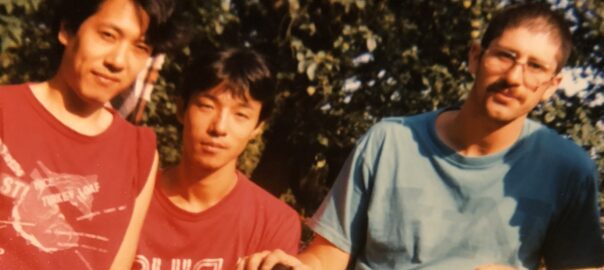
In their scorching sets at the 1983 Montreux Jazz Festival and the Rathausplatz Bern, SADATO GROUP pushes the sound of music into new dimensions. Exploratory in nature, these jams move with conviction, while embracing the edgier palette of the downtown experimental scene. But they make too big a racket to be confined to smaller venues, these tracks resonate for m(M)iles. – Mark C (LIVE SKULL)
Album Information
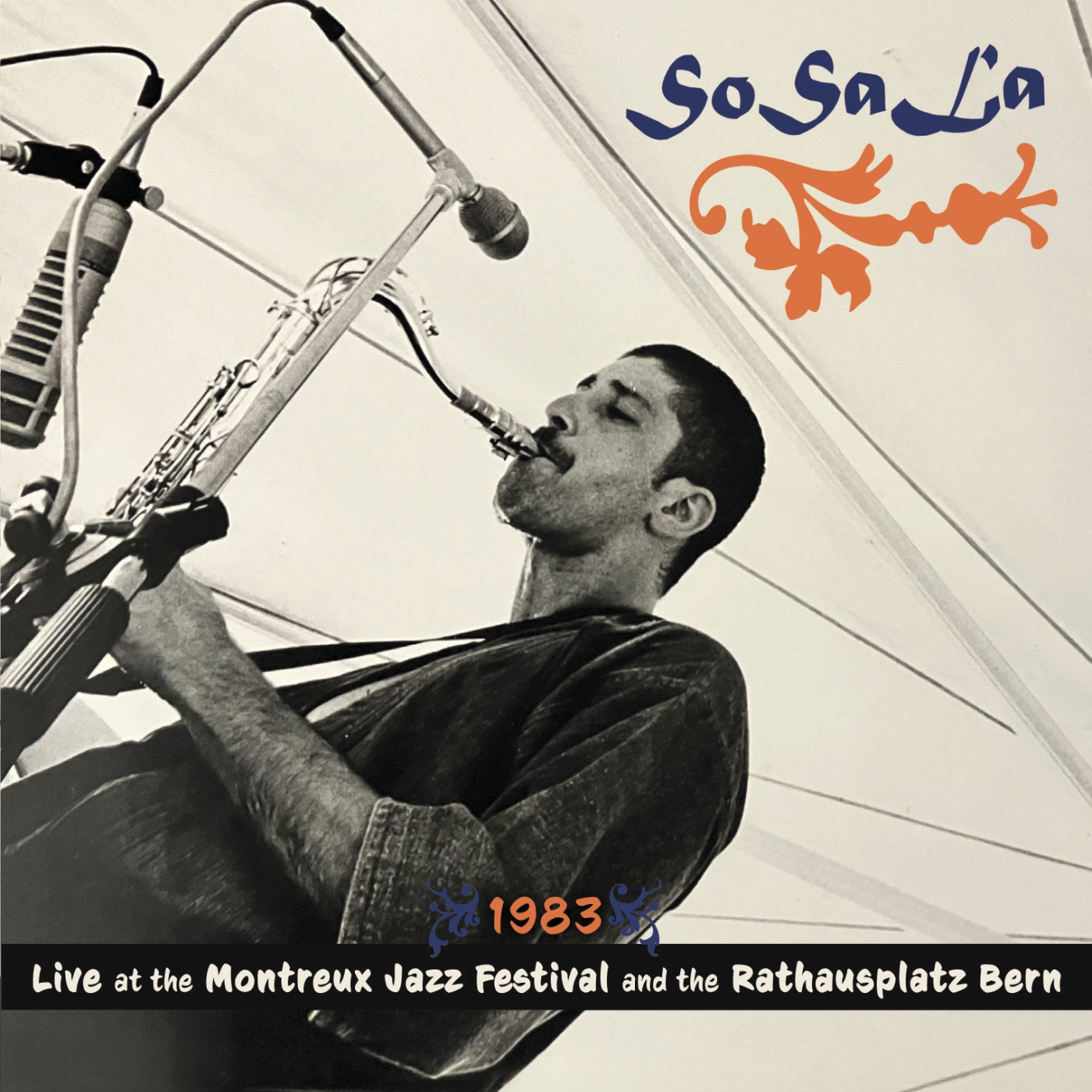 Artist: SoSaLa
Title: 1983 – Live at THE MONTREUX JAZZ FEST & RATHAUSPLATZ BERN
Formats: CD and digital download
(An autographed, numbered, and a 24-bit high resolution mastered limited edition of 100 CDs)
Cat.# / Label: DBDCD005 / DooBeeDoo Rec
UPC Code: 199800000584
CD Release: July 4, 2025
Digital and International Release: July 25, 2025
Stream here: https://soundcloud.com/sohrab-saadat-ladjevardi/sets/1983-live-at-the-montreux-jazz-fest-rathausplatz-bern
Buy here: https://doobeedoobizllc.thrivecart.com/sosala-1983/
Website: https://www.Sohrab.info
All tracks composed by Sohrab Saadat Ladjevardi
© Sohrab Saadat Ladjevardi – ℗ DooBeeDoo Worldwide Music / BMI
Produced by Sohrab Saadat Ladjevardi aka SoSaLa
Photos courtesy of Dominique Uldry (www.dominiqueuldry.ch)
Recorded live at the Montreux Jazz Festival (July 18, 1983) and Rathausplatz Bern (July 14, 1983)
Mastered by Adam Reifsteck (Teknofonic Recordings, LLC, New York)
Manufactured and printed in the USA
What the Hell are They Doing? SADATO GROUP Energizing Their Swiss Audiences with Freewheeling Music and ON & Off Stage Acting
6/20/25 – SoSaLa has released another retrospective recording from 1983, when music was made at a special time and with exceptional musicians.
This retrospective album is a must for fans interested in SoSaLa’s interesting and accomplished music career. The music on this album comes from the Japanese free jazz-punk noise scene. No band in Japan sounded like SADATO GROUP.
On this album, SoSaLa seamlessly blends Harmolodic Free-Jazz and No-Wave rock to enhance every element the music draws on. The succinct song structures provide a perfect foil for his low-fi improvisations on the soprano and tenor saxophone (not to mention his work on the Rhodes piano and harmonica). The contributions by the other musicians on the sessions bring unique dimensions and startling voices to enhance an already compelling and potent mix. The music sits well with rock and jazz, and at the same time transcends both.
The SADATO GROUP (1981-1984) (Hi)Story
In 1981, when SoSaLa lived in Osaka and was known as Sadato, he formed his first official indie “free” noise rock band, SADATO GROUP, with members Mutsuhiko Izumi on electric guitar and electric bass and drummer-pianist Hitoshi Usami.
He met them for the first time in 1981 at their “free jazz noisy duo gig” at his favorite jazz coffeeshop, Cole in Osaka-Ibaragi City. He liked what he heard and invited them to a rehearsal. After rehearsing several times, they became a band with Sadato, the leader and composer, and named the band after him, SADATO GROUP. They played mainly in Osaka, but later on, to reach a bigger audience, they decided to play every three months in Tokyo, the major music city of Japan.
SADATO GROUP became known for blending elements of alternative rock, free jazz, noise, and sometimes experimental sounds in their music. Their style may have a mix of energetic riffs, introspective lyrics, and unique arrangements that set them apart in the Japanese indie rock and jazz music scenes.
They recorded the album In The Woods of Japan in 1983, which hasn’t been released yet but will be soon. In 1984, they released the 7-inch plexi SADATO GROUP Kafesho + Gohon Gahon on the Osaka indie label Kangan Rec.
In 1983, they toured Switzerland and France, performed at the Rathausplatz Bern on July 14, and in Montreux at the Montreux Jazz Festival (the founder and music director of the most prestigious and long-standing jazz festivals in the world, Claude Nobs, personally invited SG to perform) on July 18. They also did a radio performance in Paris on Radio Nova 101.5 FM on July 29.
Sadato’s Swiss friend and photographer, Urs Lauterburg, organized the Swiss tour.
And the RADIO NOVA by Sadato’s Parisien friend Hubert Bernady, where they played two 45-minute sets. The session was recorded and might be released soon. Their music was super well-received by the listeners.
Playing at all three venues, especially the Montreux Jazz Festival, were notable moments in Sadato’s career, showcasing his unique blend of stage performance, indie “free” rock, Middle Eastern, and free jazz influences to an international audience.
The original members of the SADATO GROUP are Sadato, a musician (tenor and soprano sax, guitar, keyboard, harmonica, vocals) and performer; Mutsuhiko Izumi, guitar and electric bass; and Hitoshi Usami, drums, percussion, and piano. They were later joined by Koji Ito, tenor sax; Kazuki Takami, keyboard and piano; German Uwe Walter, shakuhachi cello, vocal and pantomime; and the Kyogen actor Akira Sugiyama.
When SADATO GROUP played in Tokyo, Sadato invited local musicians to join, such as Tom Hojnacki from the US on drums and percussion, Douglas Lamont from Canada on keys and vocals, a striptease dancer, and Butoh dancers from the Butoh dance group Hoppo Butoh Ha.
In 1984, the SADATO GROUP disbanded because Sadato had moved to Tokyo to pursue his music career in Japan’s music city. Until 2008, he put together a couple of bands in the following order: ALEF, DAITAI 99, HoSaLa (a music project with Tom Hojnacki and Douglas Lamont), the Osaka duo KUSHAMI, SADATO, THE TEHRAN BROTHERS, and THE TEHRAN-DAKAR BROTHERS with Senegalese sabar drummer Wagane N’Diaye Rose.
The Tracks
The Montreux Jazz Festival
1. Confusing World (10:10)
2. MJF’s When I’m Crazy, I’m Normal (4:08)
3. Let’s Have a Good Time (11:53)
4. MJF’s Ningen in Africa, Ningen in Nippon (7:29)
5. MJF’s SA SI SU SE SO (3:46)
Rathausplatz Bern
6. 1-2-3-4 (5:10)
7. Paul Klee Musical Colors (8:44)
8. Zehn Vor Vier in Bern (9:44)
About the Musicians
SoSaLa (who called himself Sadato in Japan) – whom the legendary jazzman Ornette Coleman, one of SoSaLa’s mentors, described as “the freest rock saxophonist” is a saxophonist/band leader/composer/improviser and who has lived and performed in Switzerland (1953), Germany (1953-1974), Japan (1974-2008), and the US (2008-). He has performed and/or recorded as a leader with his bands (SADATO GROUP, ALEF, SADATO, The Tehran-Dakar Brothers, etc.) and with Salif Keita, Ornette Coleman and the MASTER MUSICIANS OF JAJOUKA, Burnt Sugar & The Arkestra Chamber, Butch Morris, Karl Berger, and many others. He produced several independent releases, published the online magazine DooBeeDooBeeDoo NY, and founded and leads the musicians’ rights activist foundation Musicians For Musicians (MFM).
Sadato was notorious in Japan for his saxophone and stage performance work. He became a notable figure in the Japanese free jazz and indie rock scenes because of his multi-media (music, video, and stage performance) and multi-language (English, German, Japanese, and Farsi) performances. SADATO GROUP was the only band blending elements of (free) jazz, rock, and Middle Eastern 6/8 and modes into its performances.
As an instrumentalist and composer, he was musically influenced by Japanese free jazz musicians, such as Yamashita Yosuke, and improvisers, namely Toshinori Kondo. As a singer by vocalists, such as Jim Morrison, Captain Beefheart, Johnny Rotten, flamenco, and Persian classical singers. And as a stage performer, he incorporated Butoh dance, mime, and martial arts movements.
Sadato’s unique background—Iranian, living in Japan, and practicing martial arts—allowed him to bring a distinct cultural and musical fusion to his work, which resonated across different genres and audiences.
His tenor and soprano saxophone playing was unique and original. He didn’t care for technique so much as for the sax sound. He was self-taught and never studied music. He left the “talking” primarily to his sax and the other instruments he played: guitar, drums, harmonica, flute, synthesizer, and the flute. His work often involves an expressive, fluid style that enhances the overall atmosphere of the music he’s involved in, whether in live performances or recordings.
His music may appeal to listeners who enjoy experimental jazz or cross-cultural collaborations. Through performance and music, Sadato was a great communicator with the audience. Sometimes, he invited an audience member to play with the band.
Read his complete bio here: https://sohrab.info/bio-2/.
Mutsuhiko Izumi is a Japanese musician, songwriter, and key figure in the SADATO GROUP. He is known for his unique musical style, often incorporating various genres and influences into the band’s indie rock sound. In addition to Sadato’s sax and vocals, Izumi’s guitar and bass playing were the creative force behind the band. He plays an essential role in shaping their distinctive sound, often blending emotional depth with experimental elements.
As a bassist, his bass lines are essential in defining the band’s sound, offering a solid foundation that complements the band’s dynamic rhythms and melodies. As with many indie rock bands, the bass often provides both the groove and the emotional backbone of the music, and Izumi’s style likely adds depth and texture to the band’s compositions.
He often mixes melodic playing and rhythmic support, giving the music a unique balance between structure and expression. His contributions are crucial to the band’s overall sound, providing a counterpoint to the other instruments and often adding a more intricate layer to the music.
He was also involved in other musical projects or collaborations outside the SADATO GROUP, AFTER DINNER, DADA, and Kennedy.
As a composer and producer noted for a lengthy career in the video game industry, particularly with Konami, for whom he was employed for over 30 years, he has contributed music to several rhythm games since the early 2000s. He retired from Konami in late 2019, just after his 65th birthday, though he remains semi-active composing music.
Hitoshi Usami is the drummer, percussionist, and keyboard player for the SADATO GROUP. His rhythmic prowess contributes significantly to the band’s sound. His style often combines precise technical skills with a unique, expressive approach to percussion, which helps drive the band’s energetic and sometimes experimental indie rock sound.
As a drummer, Usami is known for blending traditional rock drumming with more complex rhythms, adding depth to the group’s music. Like many musicians in the indie scene, his work is integral to the overall texture of the band’s compositions, where his playing might range from subtle and atmospheric to powerful and intense.
About the Tracks
All tracks are composed by Sohrab Saadat Ladjevardi aka Sadato.
Both concerts were outdoors and in the afternoon. In Montreux, the stage was above the venue’s pool, and in Bern, it was at the city hall square, a central gathering place for events and activities in front of the city hall.
Regarding Sadato’s performance and music, when you hear long guitar or bass intros followed up by drums later, Sadato would perform off stage, interact with the audience, and go on until he reached the stage and started playing his sax or talking to the audience through the microphone.
In all concerts, he dressed up in a Kendo – a Japanese swordsmanship – uniform called “kendo-gi,” specifically consisting of a keikogi (the top) and a hakama (the skirt-like pants), which gave him a samurai look. His short haircut made the audience believe that he was Japanese. He used unusual and eccentric things in his performances, such as a toy gun, water bowls, a Japanese fan, a bamboo sword, a Noh mask, etc.
His main goal as a performer was to put on some bizarre makeup, speak and sing in meaningless word combinations of different languages, and interact with the audience by talking to them directly, provoking or surprising them.
Reg. titles starting with “MJF” stand for “Montreux Jazz Festival.” There are other published versions of this track.
The Montreux Jazz Festival
1. Confusing World (10:10)
Sound: Progressive Rock/Noise
The Izumi-Usami duo performed the intro song, interacting musically with Sadato’s off- and on-stage performance.
Sadato began his act from within the audience, with a swimming pool in the middle. He approached the stage with slow and dramatic movements in the Butoh dance style. Izumi’s long guitar melodic noise and Usami’s freestyle Rhodes mellow sounds created a psychedelic ambience, which switched to the drums playing freestyle, culminating in a heavy, funky 4/4 rock beat.
To give his performance more dramatic impact, Sadato was dressed in a Japanese Kendo uniform, wearing a Noh mask on his face, covering his head with a towel, carrying a backpack on his back with a toy gun inside, and holding a Japanese fan in his right hand.
Izumi and Usami started playing that heavy 4/4 rock beat when Sadato reached the stage.
Sadato took his position in front of the vocal mike and stood still, miming the “confusion of the world” with the Noh mask and making bizarre head and neck movements. The audience freaked out when they saw Sadato’s act, which they hadn’t seen before.
Sadato’s stage performance was intended to confuse and surprise the audience with unseen images, movements, and sounds.
2. MJF’s’s WheI’m’m CrazyI’m’m Normal (4:08)
Sound: indie rock/NO WAVE/Downtown Music/Protest Song
The title and the lyrics speak for themselves. Sadato felt like a “lousy Japanese” with white skin. The Japanese people and media called him “Henna Gaijin” or “Nazo No Sadato,” which means “Strange Foreigner” or “Mysterious Sadato.” Called by these terms, Sadato felt the opposite about himself: being an “ordinary” person.
3. Let’s Have a Good Time (11:53)
Sound: free jazz/noise/funky progressive rock/
After the noisy intro of this song, it was time for the audience to dance. Sadato switched to the soprano sax to make the sound lighter. Izumi switched to electric bass. But when Usami switched to a very fast 4/4, Sadato switched to the tenor and played an Albert Ayler-style tenor sax solo. Surprisingly, the audience had no problem following the aggressive performance of this trio. On the contrary, it enjoyed the high-energy performance. The song ends with Sadato hitting a chord on the Rhodes piano.
4. MJF’s Ningen in Africa, Ningen in Nippon (7:29)
Sound: free Afro Beat/protest song
Free noisy Afro Beat with Sadato on the Rhodes in the beginning and on a “jungle” sounding soprano sax and tenor sax later, joined by Usami’s African polyrhythmic textures and Izumi’s Hendrix-like playing intertwining with Sadato’s vocals. In this song, Sadato expressed lyrically (Ningen means “man”, “people” or “human being”) and musically (playing the soprano) how he felt about the absurdity of life and politics; and how he looked at people in general, making fun of their hypocrisy.
5. MJF’s SA SI SU SE SO (3:46)
Sound: groove/progressive rock/free rock
This grooving song is the outro of the concert in which Sadato successfully gets the band and audience in perfect unison. The ending is theatrical. Later in Sadato’s career, this song became a hit and was rearranged and released in two different-sounding variations.
Rathausplatz Bern
6. 1-2-3-4 (5:10)
Sound: indie rock/free jazz
Sadato’s performance consists of two elements: the music and his stage performance. He executed full self-expression by playing his sax and other instruments. The lyrics speak out to the audience. And his stage performance wearing the Keiko-gi and doing specific body movements to attract the audience’s attention. This track is a good example of how Sadato and his band interacted with the audience.
7. Paul Klee Musical Colors (8:44)
Sound: free fusion/jazz on drugs
This track features Izumi’s unbelievable bass playing (Jaco Pastorius would be jealous of him) and Usami’s drumming on his side. Sadato was acting dramatically on and off stage. At the end, he joined the band on tenor sax, playing an Aylerish free jazz tenor sax solo, exploded by the band’s fast 4/4.
F.Y.I.: Sadato was a fan of the Swiss-German painter Paul Klee, whose individual style was influenced by movements in art that included expressionism, cubism, and surrealism. Sadato liked how Klee experimented with and eventually deeply explored color theory. He had no problem thinking of sounds as specific colors because music is an art form that evokes people’s imaginations, in which colors could play an important role.
8. Zehn Vor Vier in Bern (9:44)
Sound: up-tempo four-beat/harmonica feature/City Hall bells.
Sadato speaks to the audience in German, provoking the audience, proclaiming “Die Mehrheit sagt nicht die Wahrheit,” translated into English as “The Majority doesn’t say the truth,” promoting the band, asking for financial support for the following year’s tour, and saying goodbye.
F.Y.I.: Sadato cares much about time as it is lived and felt. During a performance, he loved to announce the time to make people aware of the importance of time and their being or existence when they heard the time announcement.